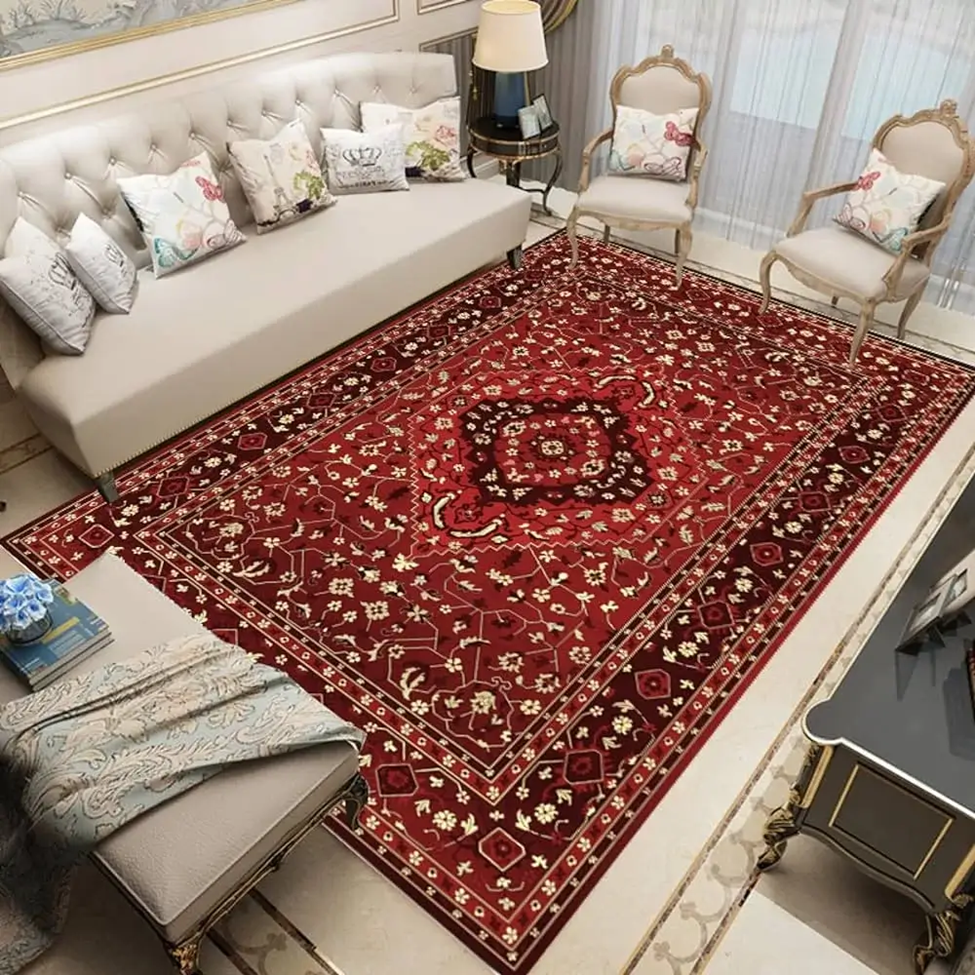
Quick Answer
The best Persian carpets for Dubai homes are hand-knotted wool or wool-and-silk pieces, sized so that 20–30 cm of bare floor shows around the edges. In this climate, dust, strong sunlight and air-conditioning cycles cause most damage. Use a breathable underlay, rotate the carpet twice a year and book a specialist for carpet fixing in dubai when you notice rippling, curling edges or loose seams.
Key Facts Table
| Topic | Quick Fact |
| Origin | Hand-knotted Persian carpets come from Iran; famous design families are named after Tabriz, Isfahan, Kashan, Qom and Nain |
| Typical materials | Wool pile on a cotton or wool foundation; silk for fine detail |
| Lifespan | Often several decades when cleaned and repaired properly |
| Washing frequency | Every 1–3 years by a specialist, depending on foot traffic |
| Recommended border | 20–30 cm of exposed floor around the rug |
| Common Dubai problems | Dust, UV fading, rippling from humidity swings, furniture dents |
Introduction
A Persian carpet is one of the few furnishings that can gain character with age. In Dubai, though, the same carpet faces heat, fine desert dust and cold air-conditioning that a traditional Iranian home never dealt with. At Risala Furniture and Interiors LLC, we see the same questions repeatedly: how do I know if it is genuine, what size should I buy, and what can be done when it starts to ripple? This guide answers them in plain language.
See also: What Is Content Curation in Ed-Tech? The Ultimate Guide
What Makes a Carpet “Persian”?
Definition
A Persian carpet is a rug traditionally hand-knotted in Iran (historically Persia) using regional patterns such as medallions, floral vines and the “boteh” motif. Quality is judged by knot density, wool or silk quality, dye stability and the evenness of the design.
How to Spot a Hand-Knotted Piece
- Flip it over. The pattern should appear almost as clearly on the back, with tiny individual knots visible.
- Check the fringe. On a hand-knotted rug, the fringe is the continuation of the warp threads, not sewn on afterwards.
- Look for slight irregularities. Tiny variations in line or colour are normal in handwork.
- Bend it. A hand-knotted rug folds flexibly; a glued or latex-backed machine rug feels stiff.
The colour-run test
Dampen a white cloth and rub a small hidden area. Colour transfer suggests unstable dyes. Reputable sellers will let you test this before you buy.
Hand-Knotted vs Hand-Tufted vs Machine-Made
| Feature | Hand-Knotted | Hand-Tufted | Machine-Made |
| Construction | Individually knotted | Yarn punched into backing with glue | Power-loom woven |
| Typical lifespan | Decades | Roughly 5–10 years | Roughly 5–15 years |
| Repairability | High | Limited | Low |
| Price level | Highest | Mid | Lowest |
| Best for | Living rooms, majlis, heirloom pieces | Bedrooms, budget upgrades | Rentals, busy family areas |
Choosing the Right Size and Style for Dubai Homes
If you are comparing a rug dubai range online or in a showroom, measure the room before you fall for a pattern. Use this quick method:
- Mark the area with masking tape.
- Leave 20–30 cm of bare floor on every side.
- In a living room, make sure at least the front legs of sofas and chairs sit on the rug.
- Under a dining table, add 60 cm beyond the table edge so chairs stay on the rug when pulled out.
Real-world example: the majlis
In a typical Emirati-style majlis with floor seating along the walls, a large rug that fills the centre and runs under the cushions makes the space feel connected. Deep reds and indigos hide dust well, while ivory-heavy designs look beautiful but need more frequent cleaning.
How Dubai’s Climate Affects Persian Carpets
Sun and dust
Summer temperatures in Dubai regularly pass 40°C, and sunlight through large villa windows fades dyes unevenly. Rotate the carpet every six months and use UV-filtering window film or curtains where afternoon sun hits the floor. Fine dust works its way into the pile and acts like sandpaper on fibres, so vacuum weekly.
Humidity and air-conditioning
Coastal humidity rises sharply in summer and drops in air-conditioned rooms. Wool absorbs and releases moisture, which can make a carpet relax and ripple. A breathable felt or rubber-blend underlay helps it stay flat; avoid cheap plastic mesh that traps moisture.
Carpet Fixing in Dubai: Common Problems and Solutions
Professional Persian Carpet Dubai covers more than people expect. Here are the usual cases:
Rippling and buckling
Waves in a wall-to-wall or large area carpet usually come from poor stretching, humidity or heavy furniture. The fix is re-stretching with a power stretcher and re-securing the edges. A rug can sometimes be flattened by correct underlay and professional blocking.
Frayed edges and damaged fringe
Binding frayed edges early prevents the pile from unravelling. Fringe can be re-secured or replaced without harming the rug’s value when done by someone familiar with hand-knotted construction.
Seams, burns and stains
Small burns and worn spots can be patched with matching wool. Seam repair is common after moving furniture or when carpet has been joined during fit-out. Risala Furniture and Interiors LLC recommends photographing the problem and measuring its length before requesting a quote, as it speeds up an accurate estimate.
Repair or replace?
Repair if the foundation threads are intact and the damage is local. Replace if the backing is brittle, large areas are moth-eaten or the cost of repair exceeds roughly half the price of a comparable new piece.
Actionable Care Tips
- Vacuum weekly with suction only; avoid beater bars on hand-knotted rugs.
- Blot spills immediately; never rub.
- Rotate 180° every six months.
- Use furniture pads under heavy legs.
- Schedule professional washing every 1–3 years.
- Ask Risala Furniture and Interiors LLC or your chosen specialist about moth prevention before long storage.
Recognised references: the Woolmark Company for wool quality, the Carpet and Rug Institute (CRI) for cleaning guidance, and OEKO-TEX Standard 100 for tested textiles.
Frequently Asked Questions
1. How much do Persian carpets cost in Dubai? Prices range from a few thousand dirhams for small machine-made pieces to tens of thousands for fine hand-knotted silk. Size, knot density and age are the biggest factors.
2. Are Persian carpets suitable for Dubai’s climate? Yes, wool is naturally resilient. They need sun protection, breathable underlay and regular cleaning.
3. How do I know if a Persian rug is real? Check the back for individual knots, confirm the fringe is part of the rug and ask for origin documentation.
4. How often should I wash a Persian carpet? Every one to three years, depending on foot traffic, pets and dust levels.
5. Can a rippled carpet be fixed? Usually, yes. Re-stretching, new underlay and correct edge fixing solve most cases.
6. What size rug should I buy for a living room? Choose one that leaves 20–30 cm of floor visible around it, with at least the front furniture legs on the rug.
7. Does sunlight fade Persian carpets? Yes. Rotate them and use UV-filtering film or curtains in sun-exposed rooms.
8. Is a Persian carpet a good investment? Quality hand-knotted pieces often hold value, but treat it as a home furnishing first and an investment second.
9. Where does Risala Furniture and Interiors provide its services? Risala Furniture and Interiors LLC provides its services in UAE ,OMAN , QATAR , SAUDI ARABIA , KUWAIT , BAHRAIN and all across the Gulf and Middle East region.
Key Takeaways
- Hand-knotted wool or wool-silk is best for long-term value.
- Size matters: leave a 20–30 cm border.
- Dubai’s dust, sun and humidity are the main risks.
- Early repair is cheaper than replacement.
Conclusion
Choose a genuine hand-knotted piece, protect it from sun, vacuum regularly and act on small problems quickly. If you need advice on selection or repair, the team at Risala Furniture and Interiors LLC can help you match the carpet to your room and lifestyle. Figures above are typical industry ranges and should be confirmed with your supplier.
📍 Visit us: https://maps.app.goo.gl/igmNHkW1QCyL19wT7?g_st=ac
