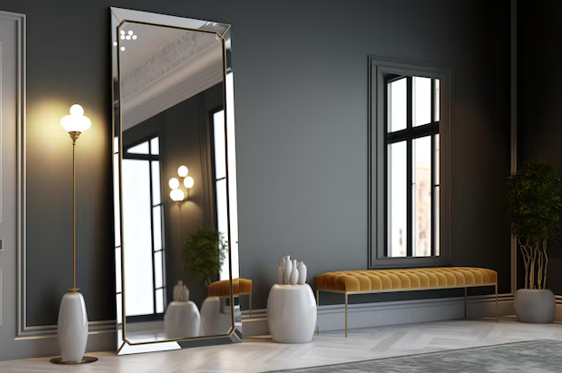
A well-chosen mirror can change how a room looks without requiring major changes to the furniture, walls, or lighting. Floor and decor mirrors are often used to add height, reflect natural light, and create a stronger visual connection between different parts of a room. Their size and placement also make them useful for bedrooms, hallways, dressing areas, living rooms, and entry spaces where both appearance and everyday function matter.
Start With the Room’s Existing Features
The surrounding space should guide the mirror rather than the other way around. Look at the available wall area, furniture arrangement, windows, doors, and sources of light before deciding on a particular style.
A large mirror may work well against a broad empty wall, while a narrower design can suit a compact room without making the area feel crowded. The wall itself also matters. A mirror positioned near a window can reflect daylight, while one placed opposite decorative furniture can make that feature more noticeable.
Before installation, consider:
- Wall width and available vertical space
- Ceiling height and room proportions
- Nearby doors, windows, and walkways
- Existing furniture and decorative pieces
- Electrical switches, lighting fixtures, and wall fittings
- The direction of natural and artificial light
These details help prevent a mirror from appearing disconnected from the rest of the room.
See also: Could Refinancing Help You Improve Your Mortgage Strategy?
Use Height to Change the Feel of a Room
Vertical mirrors can make a room appear taller because the eye naturally follows their upward shape. This can be especially useful in spaces with lower ceilings or narrow proportions.
A tall mirror placed beside a wardrobe, console, or seating area can create a stronger vertical line. Full-length designs also provide a practical benefit in bedrooms and dressing spaces, allowing a person to see an outfit from head to toe.
The frame can influence the effect as well. A slim frame keeps attention on the reflection, while a wider decorative frame can become a feature in its own right.
Place Mirrors Where They Can Reflect Something Useful
A mirror does not simply reflect light. It also reflects whatever sits in front of it, so placement deserves careful thought.
A mirror facing a window may bring more daylight into a darker area. Positioned across from artwork, plants, architectural details, or an attractive piece of furniture, it can repeat those visual elements and give them more presence.
Avoid placing a mirror where it mainly reflects:
- Cluttered shelving
- Open storage
- Blank walls with little visual interest
- Harsh overhead lighting
- Areas with frequent foot traffic
- Unfinished or unattractive sections of the room
The reflection should contribute to the room rather than create another area that needs attention.
Match the Shape to the Furniture
Shape has a noticeable effect on the character of a room. Rectangular mirrors tend to work naturally with straight-lined furniture, cabinetry, and shelving. Round and oval designs introduce softer curves that can balance furniture with sharper edges.
Arched mirrors can add a more distinctive architectural element, particularly when paired with simple furniture. Geometric designs may suit contemporary interiors where angular details already appear throughout the space.
A useful rule is to look for a relationship between the mirror and the objects around it. The design does not need to match every item, but repeating a shape or line elsewhere in the room can make the arrangement feel intentional.
Think About Placement Above Furniture
A mirror positioned above a console, sideboard, dresser, or vanity can anchor the furniture below it. Proportion matters here. A very small mirror above a wide piece can look disconnected, while an oversized mirror may dominate the furniture.
Leave enough visual space between the furniture and the mirror so that the two pieces do not appear crowded together. Decorative objects such as lamps, vases, books, or plants can fill some of the space while keeping the arrangement balanced.
For a simple setup, the mirror can remain the main feature. In a more decorative room, it can work as part of a larger arrangement.
Full-Length Mirrors Add Everyday Function
A full-length mirror is particularly useful in bedrooms, dressing areas, and entrances. Beyond decoration, it provides a practical place to check clothing, footwear, and overall appearance before leaving the house.
Placement should allow enough distance for a clear view. It should also remain outside the main path of movement. Leaning mirrors can create a relaxed appearance, but wall-mounted options may be preferable in areas where stability is a concern.
Safety becomes especially relevant with larger and heavier mirrors. The wall type, fixing method, mirror weight, and installation position should all be considered before mounting.
Consider Frameless and Framed Designs
Frames can change the visual weight of a mirror. Frameless glass tends to create a lighter appearance, making it suitable for interiors where simplicity is the priority. Framed mirrors provide more definition and can introduce materials such as timber, metal, or other finishes into the room.
The surrounding decor should influence this decision. A room with detailed furniture may benefit from a simpler mirror, while a plain wall may provide space for a more decorative frame.
Glass quality and edge finishing also affect the final appearance. Larger mirrors should be handled and installed carefully because their size makes them more demanding than small decorative pieces.
Make Lighting Part of the Plan
Lighting can alter the way a mirror looks throughout the day. Natural daylight may create a bright reflection during the morning, while wall lights or ceiling fixtures may dominate the surface after dark.
Check the mirror from different positions before fixing it permanently. This can reveal unwanted glare or reflections that may not be obvious from one angle.
Consider these lighting details:
- Direct sunlight hitting the glass
- Reflections from ceiling fixtures
- Wall lights positioned beside the mirror
- Light entering through nearby doors
- Shadows created by furniture
- Visibility during evening hours
A small change in position can sometimes produce a much cleaner reflection.
Choose Installation Based on the Mirror’s Size
Installation is not simply about finding an empty section of wall. Larger mirrors require suitable support, particularly when mounted above furniture or in frequently used areas.
The wall material should be assessed before selecting fixings. Plasterboard, masonry, timber, and other surfaces may require different installation methods. Accurate measurements also reduce the risk of placing the mirror too close to doors, furniture, or other fittings.
Luxurious Glass LLC can assist with residential mirror projects where measurements, glass selection, and suitable installation methods need careful attention.
Keep the Glass Clear and Well Maintained
Clean glass allows the mirror to perform its visual purpose properly. Dust, fingerprints, water marks, and cleaning residue can make the surface look dull and reduce the clarity of reflections.
Use a soft, non-abrasive cloth and an appropriate glass-cleaning product. Avoid rough materials that may scratch the surface. Cleaning should also be done with care around the edges, particularly on mirrors installed in areas exposed to moisture.
Regular light cleaning is usually easier than allowing marks and residue to build up over time.
Let the Room Decide the Final Look
The most suitable mirror depends on the room’s dimensions, furniture, lighting, and intended use. A tall design can suit a narrow bedroom or hallway, while a broad horizontal mirror may work better above a long console. A rounded shape can soften a room filled with straight lines, while a simple frameless option can keep a compact space visually light.
Take measurements, study the reflections, and consider how the mirror will function as part of the room rather than as an isolated decoration. Contact us today to discuss your mirror requirements and find an option that suits your space, layout, and interior style.
