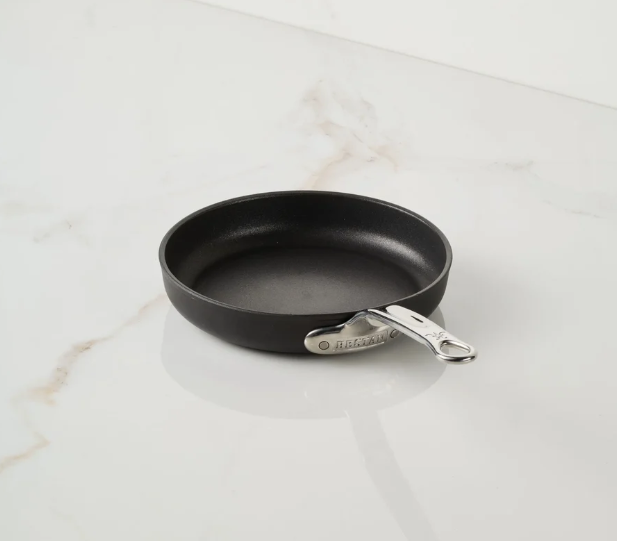
A skillet is one of the cookware pieces most home cooks reach for repeatedly. Breakfast eggs, sautéed vegetables, seared chicken, burgers, fish and quick weeknight meals can all start in the same pan. The challenge is finding a skillet that combines a useful cooking surface with easy food release, straightforward cleanup and construction that can handle regular use.
The TITUM® Fusion Nonstick Open Skillet collection is designed around those everyday requirements. Available in several sizes, the skillets combine a diamond- and titanium-reinforced nonstick cooking surface with Hestan’s Double Impact Base. The collection is also handcrafted in Italy and designed for use across cooktops, including induction.
Choosing the Right Skillet Size
The TITUM Nonstick Open Skillets are available in 8-inch, 9.5-inch, 11-inch and 12-inch sizes, along with selected multi-piece combinations.
The right size depends less on the number of people in your household and more on what you usually cook.
8-inch skillet
An 8-inch skillet works well for smaller portions and individual servings. It can be useful for eggs, reheating smaller portions, making a grilled sandwich or preparing a quick side dish.
9.5-inch skillet
A 9.5-inch pan offers a little more room while remaining relatively compact. It is a practical everyday size for breakfast foods, smaller cuts of meat and sautéed vegetables.
11-inch skillet
The 11-inch size gives you more cooking room for meals where ingredients need to spread across the surface. It can be useful when preparing proteins alongside vegetables or cooking larger portions without immediately moving to a large sauté pan.
12-inch skillet
A 12-inch skillet is suited to larger meals. The additional surface area can make a difference when searing several pieces of food or cooking for multiple people.
Hestan states that the TITUM Fusion skillets provide up to 30% more cooking surface than ordinary skillets. More usable surface can help reduce crowding, which matters when searing foods that need direct contact with the pan.
What Makes TITUM Nonstick Different?
The TITUM cooking surface is reinforced with diamond and titanium particles. Hestan states that the coating is designed to provide 22 times the durability of typical nonstick coatings.
That construction is particularly relevant for everyday cooking. A nonstick skillet needs to release foods without excessive sticking while also handling repeated cooking and cleaning.
The surface is textured rather than completely smooth. According to Hestan, this design supports searing and browning while maintaining nonstick food release.
The cookware uses a PTFE-based nonstick finish. Hestan also states that the finish is made without PFOA and is FDA-approved for its intended use.
Why the Double Impact Base Matters
Nonstick performance is only one part of a skillet’s cooking behavior. The base also affects how the pan sits on the cooktop and responds to heat.
TITUM Fusion uses Hestan’s patented Double Impact Base, which consists of stainless-steel layers bonded to an aluminum body. The company designed this construction to resist warping and help keep the cooking surface flat.
A flat pan matters because it helps maintain consistent contact with the cooktop. Hestan also explains that the base is designed to keep oil centered in the pan, supporting more even browning.
For cooks who frequently sear proteins or vegetables, this is more than a construction detail. The stability of the pan can affect how evenly ingredients contact the heated surface.
Everyday Foods You Can Prepare
An open skillet does not need to be reserved for elaborate recipes. Its value comes from how often it can be used.
Some practical applications include:
- Eggs and omelets
- Pancakes
- Sautéed vegetables
- Chicken breasts
- Fish fillets
- Burgers
- Stir-fried vegetables
- Grilled sandwiches
- Fried rice
- Seared proteins
- Reheating leftovers
- One-pan meals
The smaller skillets are useful when preparing individual portions, while the larger sizes provide more room for family meals.
Making Better Use of a Nonstick Skillet
A durable coating does not mean the pan should be treated carelessly. Good cooking habits can help preserve the surface and maintain predictable performance.
Start by selecting the pan size according to the amount of food being prepared. Overcrowding can prevent ingredients from making sufficient contact with the cooking surface, particularly when searing.
Allow the pan to heat appropriately for the recipe rather than immediately adding a large amount of cold food. At the same time, avoid unnecessary overheating. Following the manufacturer’s care and temperature recommendations is the safest approach for maintaining any nonstick cookware.
TITUM Fusion skillets are oven safe to 500°F, according to Hestan, although they are not broiler safe.
The cookware is also dishwasher safe, while Hestan recommends hand washing. For someone who uses a skillet frequently, that flexibility makes the cookware easier to fit into different kitchen routines.
Flush Rivets Make Cleanup Easier
Small design details can have a noticeable effect during daily cooking.
TITUM Fusion cookware uses flush rivets on the cooking surface. Instead of having raised fasteners that can collect food around them, the smoother interior makes stirring and cleaning easier.
The design also helps cookware nest more neatly for storage.
That matters when several pans share the same cabinet. A skillet that is easier to clean and store is more practical when it is used several times a week.
Is a TITUM Nonstick Open Skillet Right for You?
The open skillet collection makes sense for cooks who want one of their most frequently used pans to handle a broad range of foods.
It is particularly relevant if you:
- Cook breakfast foods regularly
- Sauté vegetables frequently
- Prepare proteins in a skillet
- Want a nonstick surface that can also support browning
- Use an induction cooktop
- Prefer cookware that can move from stovetop to oven
- Want several skillet sizes for different portions
- Value easier cleanup
On the other hand, a single skillet may not replace every piece of cookware in a kitchen. Deep sauces, large batches of soup and boiling pasta are better suited to saucepans or stockpots.
The most useful approach is to choose the skillet size that matches the meals you actually prepare rather than buying a size simply because it is the largest available.
Building a Practical TITUM Cookware Collection
An open skillet can serve as the everyday starting point for a broader cookware collection. A smaller skillet can handle eggs and individual portions, while an 11- or 12-inch pan can take care of larger meals.
For cooks who regularly prepare sauces, soups, pasta or larger quantities, complementary TITUM Fusion pieces can fill those gaps. The collection includes saucepans, an essential pan, a stockpot and other cookware designed around the same TITUM nonstick system.
This makes it possible to build a cookware collection around actual cooking habits instead of purchasing unrelated pieces that perform overlapping jobs.
Final Considerations
The usefulness of a skillet comes down to how easily it fits into everyday cooking. Size, cooking surface, heat behavior, handle design, cleaning and storage all affect how often you reach for it.
The TITUM Nonstick Open Skillet collection combines multiple sizes with a diamond- and titanium-reinforced nonstick surface, Double Impact Base construction, induction compatibility and oven safety up to 500°F. Hestan also states that the skillets are handcrafted in Italy and backed by a lifetime warranty.
For cooks looking for a dedicated everyday skillet, choosing the size around the meals and portions they prepare most often is the best place to start.
