Core Technical Architecture of Huawei’s Electric Drive Systems
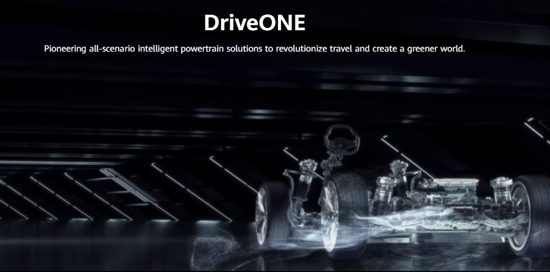
Huawei’s electric drive systems, branded as DriveONE, are built on a fully integrated, all-stack development framework that addresses key pain points in traditional electrified powertrains: efficiency, compactness, and reliability. At the heart of each DriveONE unit is a combination of high-performance permanent magnet synchronous motors, silicon carbide (SiC) power modules, and a coaxial integrated reducer—all engineered to minimize energy loss while maximizing power density. Unlike many competitors that use water-based cooling for motor stators, Huawei adopts direct oil cooling for both stator and rotor components, which reduces operating temperatures by up to 15 degrees Celsius compared to indirect cooling methods. This design cuts copper and iron losses, boosting overall system efficiency to 96.5% in optimal conditions, a figure that outperforms most conventional powertrains by 3 to 5 percentage points. The SiC modules, sourced from Huawei’s semiconductor division, further enhance performance by lowering conduction and switching losses, especially at high speeds (above 100 km/h), where efficiency gains can reach 6% to 8%. For instance, in a 120 km/h highway test, a DriveONE-equipped passenger vehicle uses 12% less energy than a similar model with a silicon-based controller. The system also includes a proprietary vehicle control algorithm that adjusts torque output in real time based on driving conditions, load, and battery state, ensuring balanced performance and efficiency across every scenario.
Industry Applications and Real-World Deployment Cases
Huawei’s electric drive systems are not limited to passenger cars; they serve a wide range of sectors, including commercial vehicles, buses, heavy trucks, and even specialized industrial equipment. One of the most notable deployments is with VDL Bus & Coach, a European bus manufacturer that integrated DriveONE into its Citea SLF electric buses for Brussels’ public transit network. Before adopting Huawei’s system, these buses had a maximum range of 200 km on a single charge and an energy consumption rate of 0.8 kWh per km. After upgrading to DriveONE, the range increased to 220 km, while consumption dropped to 0.72 kWh per km—translating to annual savings of over 12,000 euros per bus in electricity costs for the transit authority. In the heavy truck segment, Huawei partners with leading Chinese manufacturers like Sany Group to develop electric heavy-duty trucks for long-haul logistics. A Sany electric 49-ton truck equipped with DriveONE delivers a peak power of 350 kW and can climb a 10% gradient at full load without performance degradation, a critical feature for cross-country routes in mountainous regions. For passenger cars, Huawei’s DriveONE is used in AITO’s M5 and M7 models, which combine the drive system with Huawei’s HarmonyOS for a seamless in-vehicle experience. The AITO M5’s rear-wheel drive version accelerates from 0 to 100 km/h in 4.4 seconds while maintaining an efficiency of 15.8 kWh per 100 km, a figure that positions it among the top performers in its class. Additionally, Huawei’s electric drives are making inroads into industrial settings, such as electric port cranes, where they reduce carbon emissions by up to 80% compared to diesel-powered alternatives.
See also: How Home Builders Port Macquarie Bring Your Building Plans to Life
Key Differentiators Over Competing Electric Drive Solutions
What sets Huawei’s electric drive systems apart from competitors is its commitment to full-stack in-house development, which eliminates reliance on third-party components and allows for tight integration across all system parts. Most rivals source motors, controllers, and reducers from different suppliers, leading to compatibility issues and suboptimal performance. Huawei, however, designs every element—from the motor’s magnetic circuit to the control software—under one roof, ensuring that each component works in harmony. For example, the control algorithm is calibrated specifically for the DriveONE motor and reducer, resulting in smoother torque delivery and lower noise levels. Another critical differentiator is the system’s compactness: a typical DriveONE unit for commercial vehicles weighs around 280 kg and has a volume of 300 liters, while a comparable non-integrated system weighs 400 kg and occupies 420 liters. This reduction in size and weight translates to more space for batteries or cargo, a major advantage for commercial vehicles. Reliability is another area where Huawei excels. The DriveONE system undergoes rigorous testing across extreme environments, including temperatures ranging from -45 degrees Celsius in northern China to 55 degrees Celsius in the Arabian Peninsula. In Kazakhstan, electric heavy trucks equipped with DriveONE have operated through harsh winters without any performance drops in range or power, a feat many competitors struggle to achieve. The system also meets IP6K9K standards for water and dust resistance, meaning it can withstand high-pressure water jets and operate in dusty or wet conditions—ideal for construction sites or off-road applications. Unlike some systems that require frequent maintenance, Huawei’s DriveONE has a service life of over 1 million kilometers for commercial vehicles, reducing total ownership costs for fleet operators.
Future Roadmap and Global Impact of Huawei’s Electric Drives
Looking ahead, Huawei is investing heavily in advancing its electric drive technology to meet the growing demand for electrification across all mobility sectors. The company’s next-generation DriveONE systems will move beyond three-in-one integration (motor, controller, reducer) to four-in-one and even eight-in-one configurations, combining additional components like DC-DC converters, on-board chargers (OBC), and power distribution units (PDU). The eight-in-one system, scheduled for launch in 2025, will reduce overall system weight by 40% and volume by 35% compared to current models, making it suitable for even more compact vehicles and specialized equipment. Huawei is also focusing on higher voltage platforms, with plans to support 1000V and 1200V systems that enable faster charging—up to 80% charge in just 10 minutes—and higher efficiency at high power levels. Beyond land mobility, Huawei is exploring applications in marine and aviation sectors, such as electric ferries and small aircraft. In collaboration with European maritime companies, Huawei is developing electric propulsion systems for coastal ferries, which would eliminate carbon emissions from short-sea shipping. The company’s long-term goal is to make electrified powertrains accessible and affordable for every type of vehicle, from city buses to long-haul trucks. By 2030, Huawei aims to be a top three global supplier of electric drive systems, serving over 10 million vehicles annually. This expansion will not only accelerate the transition to sustainable transportation but also create new opportunities for partners worldwide, as Huawei shares its technology and expertise to drive global decarbonization efforts. The company’s approach to open collaboration ensures that smaller manufacturers and regional operators can leverage advanced electric drive technology without bearing the heavy R&D costs, leveling the playing field in the global mobility market.
