Saying the shahada is a moment many people remember for the rest of their lives. The days that follow often bring a second feeling, because there is suddenly so much to learn and so many places to learn it from. This guide walks through the best Islamic study resources for new Muslims in their first year, so you can build a solid base without drowning in tabs and booklists.
Why a Small, Trusted Set of Sources Works Better
Pew Research Center estimates that close to two billion people in the world are Muslim, and the internet carries material from every corner of that community. That range is a gift, but it also means a beginner can land on a heated lecture, a technical legal debate, or a weak translation within minutes of searching. A short list of trusted sources protects you from confusion and from advice that was never meant for someone at your stage.
Habits matter as much as materials. Fifteen to twenty minutes a day usually carries you further than one long weekend session that leaves you tired and discouraged. If you want help turning that into a pattern, this guide on how to build a daily Islamic routine is a practical place to begin.
Islamic Books for Beginners Worth Owning
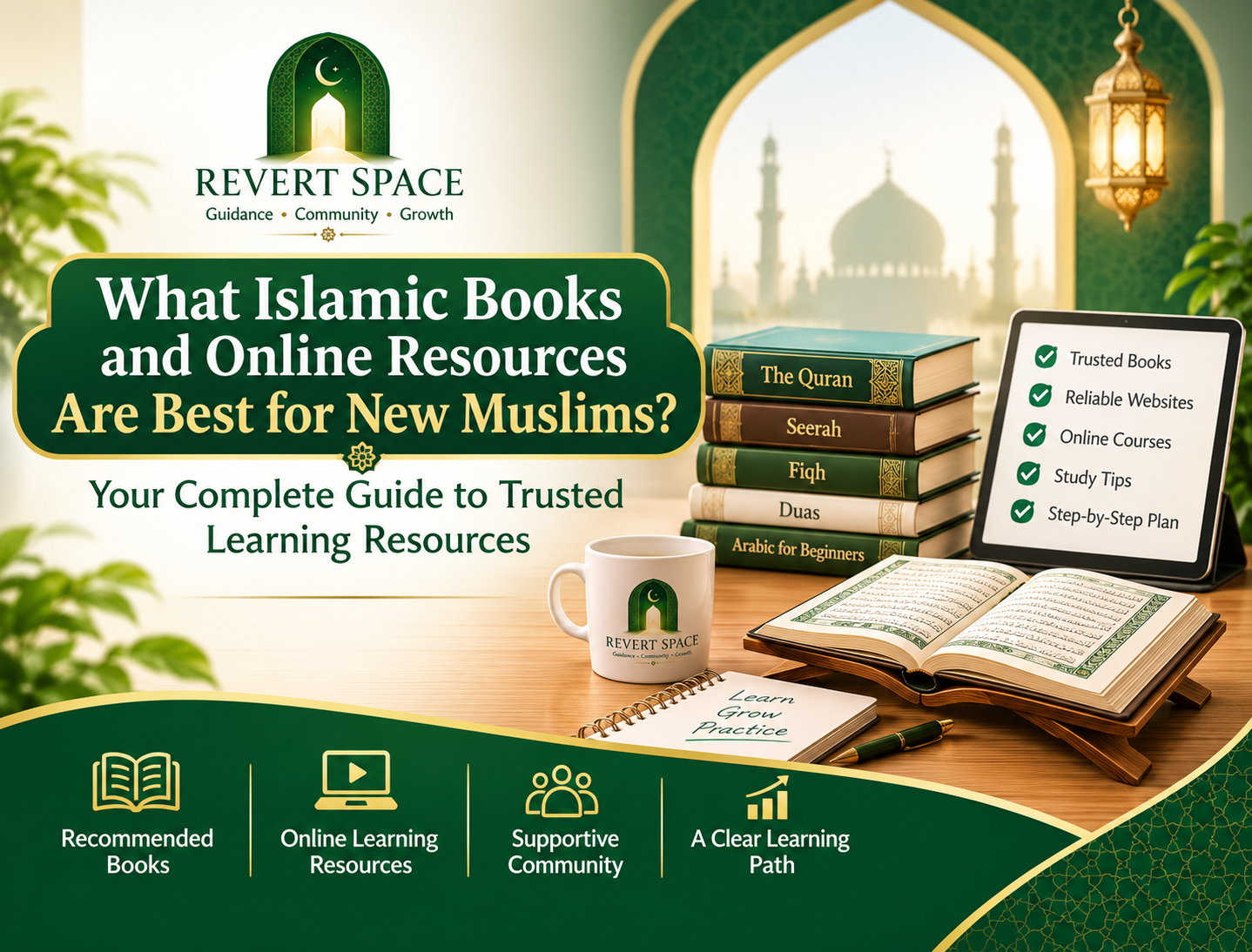
A good starter shelf covers five areas: the Quran, the life of the (PBUH), daily worship, short hadith, and character. Most people find that Islamic books for beginners work best when you buy one title per area instead of ten at once. Here are titles that many teachers recommend to people just starting out:
- Quran translation: Saheeh International is a popular, literal English rendering, and M.A.S. Abdel Haleem’s Oxford translation reads more smoothly. Pick one and keep it for the whole year.
- The Prophet’s (PBUH) life: Martin Lings wrote Muhammad: His Life Based on the Earliest Sources as a flowing narrative, while The Sealed Nectar is shorter and well organized.
- Worship: Fiqh us-Sunnah by Sayyid Sabiq explains purification, prayer, and fasting in plain language. Treat it as a reference to dip into, not a book to read front to back.
- Hadith: The Forty Hadith of Imam al-Nawawi are short, foundational, and often the first collection students study.
- Supplications: Hisn al-Muslim, also called Fortress of the Muslim, fits in a pocket and gives you duas for waking, eating, travel, and more.
- Character: Purification of the Heart by Hamza Yusuf presents a classical poem on spiritual diseases with accessible commentary.
A book cannot answer a follow-up question. Whenever possible, read with a teacher, mentor, or study partner who can.
Reliable Islamic Websites and How to Judge Them
The quality gap online is wide, so the habit of checking matters more than any single recommendation. When you search for reliable Islamic websites, run each one through four quick questions:
- Does the author name their qualifications and teachers?
- Are Quran verses and hadith cited with references you can look up?
- Are differences of opinion explained fairly, without attacking other Muslims?
- Is the tone calm and practical, or built to provoke?
Revert Space provides courses, mentorship, and community made specifically for new Muslims.
Online Islamic Learning Resources That Fit a Busy Life
One clear trend is that more beginner teaching now lives in video lessons, audio, apps, and live online classes. That shift has opened study to people with no mosque or teacher nearby. The strongest online Islamic learning resources share three traits: a clear order of topics, a named teacher, and a place to ask questions. Sequence matters because random videos can introduce advanced debates before you have learned how to pray. If you are comparing programs, this advice on how to choose a good online course covers teacher credentials, class format, and cost.
Some topics deserve focused attention early on:
- Prayer comes first for most people: This overview of what to learn about salah first breaks it into manageable steps.
- Quran reading improves quickly once you meet a few tajweed rules, even if you read slowly.
- Arabic does not require fluency. A list of the 200 Arabic words most useful to new Muslims gives you a head start in prayer and everyday conversation.
- Practice and law become clearer with the basics of fiqh, which explain how scholars reach rulings and why they sometimes differ.
- Ramadan feels gentler when you prepare early, so read what a new Muslim should know before a first Ramadan at least a month ahead.
- If everything feels scattered, the first 20 things a new Muslim should learn give you an ordered checklist.
Practical Tips for Getting More From Every Resource
Reading is only half of learning. A few small habits turn any book or video into lasting knowledge:
- Keep a notebook for questions: Write down anything confusing, then bring the list to a teacher, mentor, or study partner once a week.
- Check the date and author: Islamic basics change little over time, but contact details, class schedules, and prices do.
- Mix formats: Read a chapter, listen to a related lecture, then explain it aloud in your own words. Teaching it back, even to an empty room, shows you what you have really understood.
- Apply one new thing each week: Learning how to make wudu means little until you have done it a few dozen times.
- Be kind to yourself: Every Muslim, including those born into the faith, keeps learning for life.
Common Challenges and How to Handle Them
Almost every new Muslim runs into the same few obstacles. Knowing them in advance makes them easier to handle.
- Too much information: choose one source for each topic and stay with it for 30 days before adding another.
- Conflicting opinions: start with what Muslims agree on. When scholars differ, ask a teacher or mentor which view is commonly followed where you live.
- Fear of Arabic: learn the letters first, use transliteration as a temporary bridge, and move toward the script gradually.
- Learning alone: study sticks better with company, so find a way to build community around your learning, even if it is a weekly call with one friend.
- Doubtful sources: if a claim surprises you, pause and ask someone qualified before acting on it.
A Simple First-Year Plan
- Month one: wudu, salah, the meaning of the shahada, and a few short surahs.
- Months two and three: daily duas, Arabic letters, and the opening chapters of one biography of the Prophet (PBUH).
- Months four to six: basic fiqh, the Forty Hadith, and a regular mentor or class.
- Months seven to twelve: tajweed practice, Ramadan preparation, and slow reading of the Quran with a trusted translation.
Adjust the pace to your own life. Steady progress counts for more than speed, and nobody expects you to finish everything in twelve months.
Frequently Asked Questions (FAQs)
1. Which Islamic book should a new Muslim read first?
Begin with one clear English translation and a short biography of the Prophet ﷺ. Reading a little each day will help you learn the Quran at a steady pace without feeling overwhelmed.
2. How can I learn to pray using online Islamic learning resources?
Choose a lesson that breaks prayer into small parts and lets you practice along with it. A step-by-step prayer guide written for beginners is a good place to start.
3. Are online Islamic classes a good choice for beginners?
Yes, as long as the class follows a clear order and a named teacher answers questions. Many people find online Islamic courses easier to fit around work and family than classes held in a fixed location.
4. How do I know whether an Islamic website is reliable?
Look for named authors, Quran and hadith references you can check, and a calm tone. Programs led by qualified Islamic teachers are usually safer than anonymous blogs or social media clips.
5. How long does it take to read the Quran as a beginner?
Most learners can recognize the Arabic letters within a few weeks and read slowly within a few months if they practice daily. This beginner path to Quran reading for beginners shows how to build speed gradually.
6. Which duas should new Muslims learn first?
Start with short supplications for waking, eating, and sleeping, then add more over time. A collection of daily duas made for reverts keeps the list small and practical.
7. What should I study after taking the shahada?
Focus on prayer, wudu, and the core beliefs of Islam before moving on to advanced topics. This list of the first things to learn after shahada can help you plan your first few weeks.
8. Do I need to learn Arabic as a new Muslim?
You do not need fluency to practice Islam, but learning the basics improves your prayer and Quran reading. Starting with Quranic Arabic vocabulary is a manageable first step.
Conclusion
The best starting resources for new Muslims are the ones you will open every day: one translation, a few well-chosen books, a short list of trusted websites, and a teacher or community you can ask. At Revert Space, free structured courses, 1-to-1 mentorship, and a supportive community are built around exactly that approach, and more than 500 reverts have already received support there. Register on the site, pick a first course, and take the first step this week.
