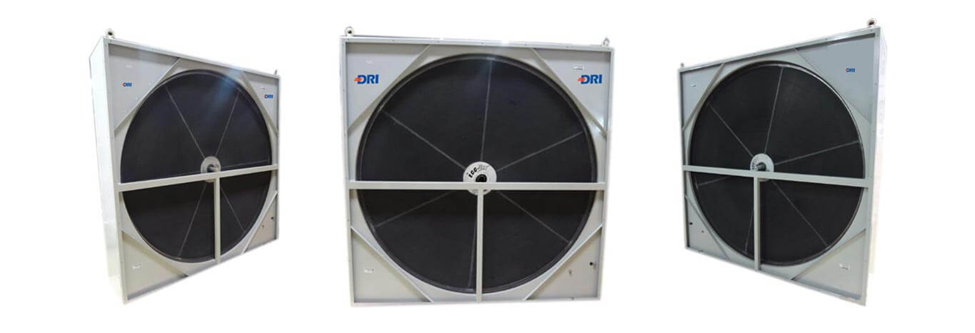
Moisture control is an important part of effective air treatment, particularly in buildings and facilities that require consistent indoor humidity levels. Excess moisture can increase the cooling load, affect indoor comfort, and create challenges for processes that depend on controlled environmental conditions. Passive dehumidification provides a way to reduce moisture in incoming air through desiccant technology without depending on a separate thermal regeneration source.
This approach can be useful for HVAC systems that need to manage outdoor air efficiently while maintaining appropriate humidity conditions. Understanding how passive dehumidification works can help engineers and facility professionals evaluate whether this technology fits their air treatment requirements.
What Is Passive Dehumidification?
Passive dehumidification is an air treatment method that uses a desiccant material to remove water vapor from an air stream. Unlike many active desiccant systems, passive systems do not require an external heat source to regenerate the desiccant during normal operation. A rotating desiccant wheel moves continuously between different air streams, allowing moisture to be adsorbed and released as the wheel rotates. The process can reduce the moisture content of incoming air before it enters a conditioned space. This makes passive dehumidification particularly relevant to HVAC applications where fresh air carries a significant moisture load.
Passive dehumidification can be incorporated into air treatment systems where the operating conditions support passive regeneration. The effectiveness of the process depends on factors such as outdoor air conditions, return air conditions, airflow rates, and the required moisture removal. Proper system design is therefore essential when selecting a passive desiccant wheel. The technology should be evaluated according to the specific psychrometric conditions and performance requirements of the application.
See also: How Home Builders Port Macquarie Bring Your Building Plans to Life
How Does a Passive Desiccant Wheel Work?
A passive desiccant wheel uses a rotating structure containing moisture-adsorbing material. As the wheel rotates, different sections of the desiccant media move through the supply air and return air streams. During the supply air portion of the cycle, the desiccant captures water vapor from the incoming air. When that section of the wheel moves into the return air stream, the captured moisture is released under suitable conditions.
The continuous rotation creates an ongoing moisture transfer process. Fresh or outdoor air passes through one portion of the wheel, while return air helps restore the moisture-adsorption capacity of another portion. Because the process is continuous, the wheel can treat air without requiring a separate batch regeneration cycle. DRI’s passive desiccant wheel technology is designed around this principle and uses return air conditions to support regeneration.
Moisture Adsorption From Fresh Air
Desiccant materials have an affinity for water vapor, allowing them to capture moisture as humid air passes across the media. The amount of moisture removed depends on the properties of the desiccant, airflow conditions, temperature, relative humidity, and the design of the wheel. The treated air leaves the wheel with a lower moisture content than the incoming air under suitable operating conditions. This can reduce the moisture load that downstream HVAC equipment needs to manage.
Passive dehumidification can therefore be useful as part of a fresh-air treatment strategy. Instead of relying only on cooling coils to handle both sensible and latent loads, a desiccant wheel can address moisture through adsorption. The overall system still needs to be designed around the required air conditions and cooling capacity. Proper integration is important for achieving the desired performance.
Regeneration Using Return Air
The regeneration stage allows the desiccant material to release the moisture it has collected. In a passive system, suitable room return air can perform this function without requiring a dedicated thermal regeneration source. DRI’s G3MA passive wheel is designed to use room return air at approximately 50% relative humidity for regeneration. This operating principle distinguishes passive desiccant technology from systems that rely on heated regeneration air.
The return air passes through the portion of the wheel that has absorbed moisture from the incoming air. Under appropriate conditions, moisture transfers from the desiccant into the return air stream. The regenerated section then rotates back toward the supply air side and can absorb moisture again. This creates a continuous cycle that supports ongoing humidity control.
Key Benefits of Passive Dehumidification
Passive dehumidification can offer several advantages when its operating conditions match the requirements of the HVAC system. Its main distinction is the ability to regenerate the desiccant without a dedicated thermal regeneration source. This can simplify the energy requirements associated with desiccant regeneration and make the technology suitable for selected fresh-air applications.
Key benefits include:
- No dedicated thermal regeneration requirement under suitable operating conditions
- Continuous moisture adsorption and regeneration
- Reduced moisture content in treated fresh air
- Integration with HVAC and ventilation systems
- Potential reduction in latent cooling requirements
- Washable and non-flammable desiccant media in applicable DRI configurations
The technology can also provide a practical approach to managing moisture before outdoor air reaches a conditioned environment. DRI reports an average moisture removal of approximately 14 grains per pound for its G3MA passive wheel. Actual performance will depend on the entering air conditions, return air conditions, airflow, wheel configuration, and other system parameters. Performance data should therefore be evaluated according to the specific project requirements.
Where Is Passive Dehumidification Used?
Passive dehumidification can be considered for a range of commercial and industrial air treatment applications. The technology is particularly relevant where outdoor air introduces moisture that needs to be controlled before entering a building or process environment. DRI identifies applications that include hotels, hospitals, supermarkets, auditoriums, and selected manufacturing and processing environments.
Commercial Buildings
Commercial buildings require controlled ventilation while maintaining comfortable indoor conditions. Outdoor air can introduce both sensible heat and moisture, increasing the demand placed on HVAC equipment. A passive desiccant wheel can help address the moisture component of incoming air where the operating conditions are suitable.
Healthcare and Public Facilities
Healthcare facilities and other public buildings can require carefully managed ventilation and environmental conditions. Moisture control can form part of a broader air treatment strategy alongside filtration, ventilation, cooling, and other HVAC functions. Passive dehumidification can be evaluated where return air conditions support the regeneration process.
Manufacturing and Processing Facilities
Some manufacturing environments require tighter control over humidity because moisture can affect processes, materials, or environmental conditions. Passive desiccant technology may be considered for applications where the required moisture removal falls within the operating range of the system.
Suitable applications can include:
- Pharmaceutical manufacturing and processing
- Food manufacturing and processing
- Electronics manufacturing
- Commercial buildings
- Hotels and hospitality facilities
- Supermarkets
- Auditoriums and other large public spaces
The suitability of passive dehumidification varies by application. Facilities requiring extremely low dew points or aggressive moisture removal may require active desiccant technology or other specialized dehumidification methods.
Passive Dehumidification and Fresh Air Treatment
Fresh air treatment is a major consideration in modern HVAC system design because outdoor air can introduce substantial moisture loads. Treating this air before it enters the conditioned space can help manage humidity and reduce the burden placed on downstream equipment. Passive dehumidification can work alongside ventilation, filtration, cooling, and energy recovery technologies as part of a broader air treatment strategy.
For systems that require controlled ventilation and heat or moisture recovery, an ERV system can also form part of the overall air treatment configuration. The appropriate combination depends on the building requirements, climate, ventilation rates, and desired indoor conditions. Passive dehumidification should therefore be viewed as one component of a properly engineered air treatment system rather than an isolated solution.
Passive Dehumidification vs. Active Dehumidification
Passive and active desiccant systems use similar fundamental moisture adsorption principles, but their regeneration methods differ. Passive systems use suitable return air conditions to regenerate the desiccant, while active systems generally introduce a separate heat source to remove the accumulated moisture. This difference affects system configuration, energy requirements, and potential applications.
Active desiccant systems can be useful where deeper dehumidification or lower dew points are required. Passive systems are more closely associated with applications where incoming fresh-air moisture needs to be reduced and suitable return air is available for regeneration. The appropriate option depends on the required leaving-air conditions, outdoor climate, return air conditions, and overall HVAC design.
What to Consider When Selecting a Passive Dehumidification System
Selecting a passive dehumidification wheel requires more than comparing nominal product specifications. The system should be evaluated against the actual operating conditions of the application. Outdoor temperature and humidity influence the amount of moisture entering the system, while return air conditions affect the regeneration process. Airflow, pressure drop, wheel dimensions, sealing, and installation configuration can also influence overall performance.
Important factors include:
- Outdoor air temperature and relative humidity
- Return air temperature and relative humidity
- Required moisture removal
- Supply and return airflow rates
- Required leaving-air conditions
- Wheel size and configuration
- Pressure drop across the wheel
- Maintenance and cleaning requirements
- Filtration upstream of the desiccant wheel
A proper psychrometric evaluation can help determine whether passive dehumidification is appropriate. Engineers should consider both sensible and latent loads rather than evaluating moisture removal separately from the wider HVAC system. Correct sizing and integration can also help prevent unnecessary pressure drop or insufficient moisture treatment.
Supporting Air Quality and Environmental Control
Humidity management is often considered alongside other air treatment requirements. Depending on the application, HVAC systems may also need filtration, ventilation, contaminant control, exhaust management, and energy recovery. Integrating these functions can help create a more coordinated approach to indoor environmental control.
For applications involving commercial kitchens and exhaust air management, an ecology unit can serve a different but complementary air treatment function. The correct equipment depends on the type of air being treated and the specific requirements of the facility. A complete system assessment helps determine which technologies should work together and where each component should be installed.
Conclusion
Passive dehumidification provides a practical method for controlling moisture in incoming air when the operating conditions support return-air regeneration. Desiccant wheels continuously adsorb moisture from the supply air and release it through the return air stream, allowing the process to operate without a dedicated thermal regeneration source. This can make passive technology relevant to selected commercial, institutional, and industrial HVAC applications. Proper evaluation of outdoor conditions, return air, airflow, moisture requirements, and system configuration remains essential for achieving the desired results.
For organizations evaluating passive desiccant technology, the right solution depends on the specific air treatment requirements of the facility. A complete HVAC assessment can determine whether passive dehumidification, active desiccant technology, energy recovery, ventilation equipment, or a combination of these technologies is appropriate. For project-specific requirements and technical guidance, you can contact Desiccant Rotors International.
Frequently Asked Questions About Passive Dehumidification
1. What is passive dehumidification?
Passive dehumidification uses a desiccant material to remove moisture from an air stream without relying on a separate thermal regeneration source under suitable operating conditions. A rotating desiccant wheel adsorbs moisture from incoming air and uses appropriate return air conditions to regenerate the desiccant.
2. How does a passive desiccant wheel remove moisture?
A passive desiccant wheel contains moisture-adsorbing media that captures water vapor from incoming air. As the wheel rotates, the moisture-loaded section moves into the return air stream, where the captured moisture is released. The regenerated section then returns to the supply air side.
3. Does passive dehumidification require heat for regeneration?
A passive dehumidification system is designed to regenerate the desiccant using suitable return air conditions rather than a dedicated thermal regeneration source. However, performance depends on the temperature and humidity relationship between the supply and return air streams.
4. Where can passive dehumidification be used?
Passive dehumidification can be considered for commercial buildings, hotels, hospitals, supermarkets, auditoriums, and selected pharmaceutical, food, and electronics manufacturing applications. Suitability depends on the required moisture removal and operating conditions.
5. What is the difference between passive and active desiccant dehumidification?
The primary difference is the regeneration method. Passive systems use suitable return air conditions to regenerate the desiccant, while active systems generally use an external heat source. Active systems may be more suitable for applications requiring deeper dehumidification or lower dew points.
