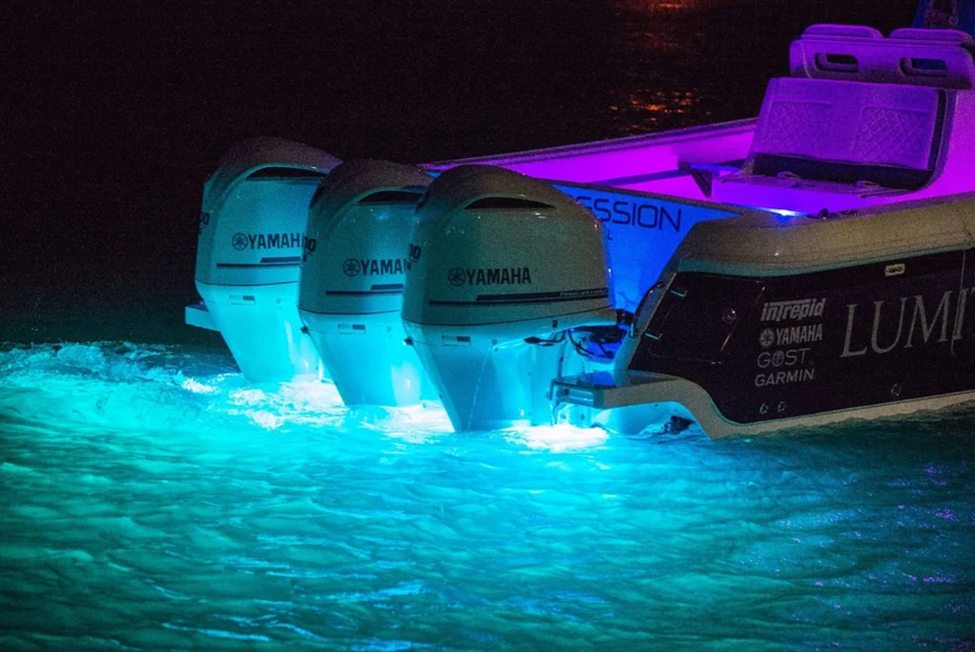
Night fishing changes the way anglers read the water. Depth, visibility, bait movement, and boat position all become harder to judge after sunset. Underwater fishing lights can provide a practical source of illumination beneath the surface while also helping anglers observe activity around the boat.
LED technology has made these lights more efficient, durable, and easier to install than many older lighting systems. Still, not every underwater fishing light offers the same performance. Light colour, brightness, construction, power requirements, mounting method, and beam coverage all affect how well a light performs on the water.
Why Underwater Lights Are Used for Fishing
Underwater fishing lights are designed to illuminate the area beneath or beside a boat. Their glow can make it easier to observe baitfish, structure, and movement in the water during nighttime trips.
Artificial light can also attract small organisms and baitfish toward an illuminated area. Predatory fish may follow the available food, creating activity that anglers can observe and fish around. The effect varies according to species, water conditions, depth, weather, and local fishing habits, so the light should be viewed as a fishing aid rather than a guarantee of increased catches.
For anglers who spend long hours on the water after dark, underwater lighting also provides better visibility around the hull. It can make equipment, lines, and nearby water easier to see while adding useful illumination to the boat’s surroundings.
See also: How Home Builders Port Macquarie Bring Your Building Plans to Life
Light Colour Makes a Difference
Colour is one of the first specifications anglers should examine.
Green underwater lights are widely used because green wavelengths can remain visible in water and create a broad area of illumination. They are often selected for fishing applications where the goal is to attract and observe bait activity.
Blue lights produce a different appearance and are commonly chosen for their visibility and aesthetic effect. They can provide useful underwater illumination, although their fishing results may differ depending on the water and target species.
White lights provide strong general illumination. They can be useful when visibility is the main priority, particularly around docks, boat hulls, and shallow areas.
Some lights allow users to switch between colours. This provides flexibility for anglers who fish in different locations or target different species.
Brightness and Beam Coverage
A high lumen rating can look attractive on a product specification sheet, but brightness alone does not determine performance.
Beam angle affects how the light spreads underwater. A narrow beam concentrates illumination into a smaller area, while a wider beam covers more water. Anglers fishing deeper water may prefer a light that sends concentrated illumination downward rather than spreading most of its output close to the surface.
The number and placement of LEDs also matter. Multiple LED elements can distribute light more evenly across the lens, reducing dark areas within the illuminated zone.
Water clarity should also influence the choice. Very bright lighting may not provide better visibility in heavily stained or sediment-filled water because suspended particles can scatter the light.
Look for Marine-Grade Construction
An underwater fishing light operates in a demanding environment. Saltwater, freshwater, pressure, temperature changes, vibration, and physical contact with the hull can all affect the equipment.
A suitable light should have a sealed housing designed for underwater use. Marine-grade materials such as corrosion-resistant metals or durable engineered plastics can help the housing withstand prolonged exposure to water.
The lens deserves attention as well. A quality lens should remain clear and securely attached to the housing. Poor sealing can allow moisture to reach internal electrical components, eventually causing corrosion or failure.
Anglers who fish in saltwater should pay particular attention to corrosion resistance. A product designed for occasional freshwater use may not be suitable for repeated exposure to marine environments.
Check the Depth Rating
Underwater lights are manufactured for different operating depths. The stated depth rating indicates how far below the surface the light can safely operate under the manufacturer’s specified conditions.
A boat owner who plans to mount lights several feet below the waterline should check this specification before installation. Pressure increases with depth, and a housing that performs well near the surface may not be designed for deeper placement.
The rating should also be considered alongside the installation location. Transom-mounted lights, through-hull systems, and portable units may have different requirements and limitations.
Power Consumption Matters on a Boat
Electrical equipment competes for power on a boat, particularly during overnight trips when the engine may spend long periods switched off.
LEDs generally consume less electricity than comparable traditional lighting technologies while producing substantial illumination. Even so, anglers should check the light’s voltage and current requirements before connecting it to the boat’s electrical system.
Most marine lighting installations need appropriate wiring, connectors, fuses, and switches. Connections should be protected against moisture, and wiring should be routed away from areas where it could be damaged by movement, equipment, or water exposure.
For smaller boats with limited battery capacity, low power consumption can make a noticeable difference during extended fishing sessions.
Mounting Style Affects Installation
Underwater fishing lights are available in several mounting configurations.
Transom-mounted lights attach to the exterior of the boat and are generally easier to install than systems requiring a hole through the hull. They can be a practical option for anglers who want permanent underwater illumination without a more involved installation.
Through-hull lights sit within an opening made in the hull. They can provide a clean installation and direct light into the water, but fitting them requires careful attention to hull construction and waterproofing.
Portable or temporary lights offer another option. These may be useful for anglers who fish from different boats or do not want to modify the hull.
The mounting surface, cable routing, access to the power source, and manufacturer’s installation requirements should all be checked before selecting a particular style.
Heat Management Still Matters
LEDs produce less heat than many older lighting technologies, but they are not completely heat-free.
Underwater lights often use the surrounding water to help dissipate heat from the housing. This makes correct underwater operation particularly relevant. A light designed to operate submerged should be used according to its manufacturer’s instructions rather than treated like an ordinary above-water LED fixture.
A well-designed housing can transfer heat away from internal components while protecting them from water. This can contribute to longer component life and more consistent performance.
Consider Lens Design
The lens controls how light leaves the fixture. Different lens designs can produce focused beams, broad illumination, or patterns designed to distribute light across a larger area.
A smooth lens may create a concentrated beam, while textured or optical lenses can spread light more evenly.
Anglers should consider the shape and depth of the area they want to illuminate. A light mounted on the stern of a boat may need to cover a different area from one mounted along the side.
The goal is useful underwater coverage rather than simply choosing the fixture with the highest advertised brightness.
Maintenance Extends Service Life
Even a marine-rated LED light benefits from routine care.
After fishing in saltwater, rinsing exposed components with fresh water can help remove salt deposits. Mounting hardware should be checked periodically for corrosion or loosening. Cables and connectors should also be inspected for signs of cracking, water intrusion, or damage.
The lens should remain free from heavy deposits that could reduce light output. If the light is removed seasonally, storing it in a dry location and checking its seals before the next installation can prevent avoidable problems.
Match the Light to the Fishing Conditions
There is no single underwater fishing light that suits every boat or fishing situation.
An angler fishing shallow freshwater may have different requirements from someone targeting offshore species in deeper saltwater. Boat size, battery capacity, hull design, target species, water clarity, preferred fishing depth, and installation location all affect the choice.
A useful starting point is to compare the light’s colour options, lumen output, beam angle, voltage, current draw, depth rating, housing material, and mounting requirements. These specifications provide a clearer picture of how the light will perform than appearance or advertised brightness alone.
For anglers who spend regular nights on the water, a properly selected LED underwater fishing light can provide dependable illumination beneath the boat while making it easier to watch activity in the surrounding water. Careful attention to construction, electrical requirements, light distribution, and installation can help ensure the fixture is suited to the conditions where it will actually be used.
