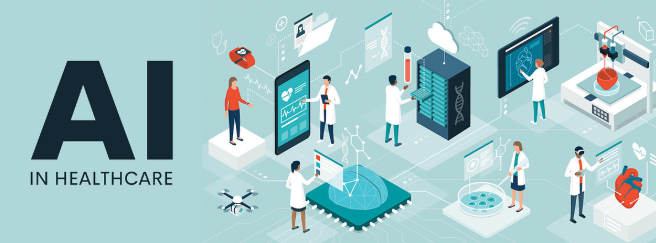
Home healthcare has traditionally depended on face-to-face care, written notes, phone calls, and periodic visits from healthcare professionals. While human care remains at the heart of the service, technology is changing how that care can be coordinated, monitored, and communicated.
For families seeking home healthcare in Lahore, particularly those caring for older parents, patients recovering after hospitalization, or people living with long-term health conditions, digital tools can make it easier to stay informed about what is happening at home.
Artificial intelligence (AI), telehealth, wearable devices, digital care records, remote monitoring systems, and caregiver applications are creating new possibilities for home-based care. Rather than replacing nurses, caregivers, doctors, or family involvement, these technologies can support them with better information and faster communication.
The World Health Organization also describes AI as a technology with significant potential in healthcare while emphasizing that it should be introduced with appropriate human oversight, governance, safety, and privacy protections.
What Does Smart Technology Mean in Home Healthcare?
Smart home healthcare refers to the use of connected digital tools to support care outside hospitals and clinics.
Depending on the patient’s needs, this may include:
- Remote blood pressure, heart rate, or oxygen monitoring
- Wearable health devices
- Digital medication reminders
- Video consultations with healthcare professionals
- Electronic care records
- Caregiver mobile applications
- Fall detection or emergency alert devices
- AI-assisted monitoring and data analysis
- Digital updates for family members
- Online scheduling and care coordination
The goal is not to fill a home with complicated equipment. Good healthcare technology should make care simpler, safer, and easier to follow.
This is particularly relevant in Lahore, where families may be balancing work, travel, hospital appointments, and the needs of an elderly or recovering family member at home.
See also: How To Choose The Best Real Estate Agency In Dubai?
1. Remote Patient Monitoring Can Provide Better Visibility
One of the most useful developments in modern home healthcare is remote patient monitoring.
Devices can be used to record information such as:
- Blood pressure
- Pulse rate
- Blood oxygen levels
- Blood glucose
- Temperature
- Physical activity
- Sleep patterns
Instead of relying entirely on occasional measurements, digital systems can create a more organized record over time.
For example, a single elevated blood pressure reading may not tell the full story. A record of readings taken over several days gives healthcare professionals more context when reviewing the patient’s condition.
Research in Pakistan is already examining smartphone-based telemonitoring programs and how they could be integrated into healthcare delivery.
However, monitoring devices should not be treated as substitutes for professional medical assessment. Their value comes from helping qualified healthcare professionals and families access better-organized information.
2. AI Can Help Identify Patterns in Health Data
Collecting health information is only useful if someone can understand it.
This is where AI can support healthcare teams.
AI-enabled systems can potentially analyze large amounts of health information and identify patterns that may otherwise be difficult to notice quickly.
For example, a monitoring system might detect that:
- Blood pressure has gradually increased over several days.
- A patient’s activity levels have dropped.
- Medication records show repeated missed doses.
- Sleep patterns have changed significantly.
- Certain vital signs frequently move outside predefined ranges.
The system may then generate an alert for review.
Importantly, an AI alert is not the same as a medical diagnosis. It should help direct human attention to information that may require further assessment.
WHO guidance emphasizes that AI in healthcare should augment rather than replace human judgment, particularly when decisions could affect patient health and safety.
3. Telehealth Is Making Professional Advice Easier to Access
Not every healthcare concern requires a trip to a hospital.
Telehealth allows patients and caregivers to communicate with healthcare professionals through video calls, phone consultations, or digital platforms.
For a patient receiving home healthcare in Lahore, this may be useful for:
- Follow-up consultations
- Reviewing symptoms
- Discussing medication concerns
- Post-discharge follow-ups
- Chronic disease management
- Reviewing home monitoring results
- Determining whether an in-person assessment is needed
Telemedicine is already becoming an important part of Pakistan’s digital healthcare landscape. Research has highlighted its potential to improve access while also identifying challenges such as digital literacy, infrastructure, regulation, and privacy.
A 2025 study involving telehealth patients in Pakistan, many from Punjab and Sindh, also found high reported satisfaction with provider professionalism and consultation quality, although connectivity and privacy remained concerns for some participants.
For home healthcare, telehealth can work particularly well when it complements rather than replaces physical care.
4. Digital Care Records Improve Coordination
Home care frequently involves several people.
A patient’s support network may include:
- Family members
- Caregivers
- Nurses
- Physiotherapists
- Doctors
- Care coordinators
Without an organized system, important information can become scattered between notebooks, WhatsApp messages, phone calls, and verbal updates.
Digital care records create a more structured way to document information such as:
- Visit times
- Vital signs
- Medication support
- Meals and hydration
- Mobility
- Symptoms
- Sleep
- Mood
- Activities completed
- Caregiver observations
This creates continuity between one shift or visit and the next.
For healthcare professionals, better documentation can help them understand what has been happening between appointments. For families, it can provide greater clarity about day-to-day care.
5. Family Members Can Receive More Timely Updates
Technology becomes especially important when the person responsible for a parent’s care does not live nearby.
A son or daughter may live in another part of Lahore, another city, or outside Pakistan altogether.
Traditionally, they might depend on occasional phone calls asking:
“How is Ammi today?”
or
“Did Abu take his medicine?”
Digital care platforms can make communication more structured.
Depending on the home healthcare provider and technology being used, families may receive information about:
- Completed caregiver visits
- Daily care activities
- General wellbeing
- Medication support
- Vital readings
- Appointment schedules
- Care notes
- Changes requiring attention
This does not eliminate the emotional difficulty of being away from a parent, but it can reduce some of the uncertainty surrounding their daily care.
6. Smart Medication Support Can Reduce Missed Doses
Medication schedules can become complicated, particularly for older adults taking several medicines at different times.
Technology can support medication routines through:
- Mobile reminders
- Smart pill dispensers
- Digital medication schedules
- Caregiver alerts
- Electronic administration records
Some systems can record whether scheduled medication support was completed and flag missed entries for follow-up.
The technology itself, however, should not decide medication changes.
Dosage, timing changes, discontinuation, or new medicines should always be handled according to instructions from an appropriately qualified healthcare professional.
7. Wearable Devices Can Support Elderly Care at Home
Wearable technology has moved beyond simple fitness tracking.
Some modern devices can monitor movement, pulse, sleep, and other indicators. Certain systems can also detect sudden movements consistent with falls or allow the wearer to trigger an emergency alert.
For elderly care at home in Lahore, these tools may provide an additional layer of support for seniors who:
- Have mobility difficulties
- Live partly independently
- Have a history of falls
- Need regular monitoring
- Are recovering from illness
- Require family supervision
Wearables should not create a false sense of security. A device cannot physically assist a person who has fallen or replace appropriate supervision for someone who needs continuous support.
It works best as one part of a wider care plan.
8. Technology Can Improve Caregiver Management
Smart healthcare technology does not only monitor patients. It can also improve how home healthcare teams operate.
Care management platforms can help providers coordinate:
- Caregiver schedules
- Attendance
- Shift changes
- Patient assignments
- Care documentation
- Supervisor reviews
- Family communication
- Incident reporting
- Follow-up tasks
This becomes important as home healthcare services grow.
Poor coordination behind the scenes can eventually affect patients. Digital systems make it easier for care managers to identify missed documentation, scheduling conflicts, or situations requiring supervisor attention.
Technology can, therefore, improve care not just at the bedside but throughout the care operation.
9. AI Could Help Make Home Care More Personalized
No two patients require exactly the same support.
An older adult with dementia has different needs from someone recovering from surgery. A person living with Parkinson’s disease may require a different routine from someone needing temporary assistance after hospital discharge.
As digital health systems become more advanced, AI may help healthcare professionals analyze a patient’s history, care records, activity, and monitoring information to identify patterns relevant to individual care planning.
This could support more personalized decisions around:
- Monitoring frequency
- Care schedules
- Mobility support
- Follow-up requirements
- Changes that should be reviewed
- Risk indicators
Again, the important distinction is that AI should support clinical and care decisions rather than make them independently.
What Does This Mean for Home Healthcare in Lahore?
Lahore has access to major hospitals, specialists, diagnostic centers, and a growing private healthcare sector. Yet families still face a practical problem: much of a patient’s recovery, chronic disease management, disability support, or elderly care happens after they return home.
This makes the connection between hospitals, healthcare professionals, caregivers, patients, and families increasingly important.
Smart home healthcare can help bridge some of those gaps.
Instead of treating home care as an isolated caregiver visit, technology can help create a connected system:
Patient at home → caregiver or nurse → digital records → care manager → healthcare professional → family
Everyone does not need access to everything. However, the right information can reach the right person when needed.
That is a more meaningful use of healthcare technology than simply adding AI to a service for marketing purposes.
What Technology Cannot Replace
Despite rapid technological progress, home healthcare remains deeply human.
- AI cannot replace the reassurance of having a trained nurse beside a recovering patient.
- A wearable cannot comfort an older adult experiencing anxiety.
- An application cannot physically help someone safely move from a bed to a chair.
- A dashboard cannot develop the trust that forms between a family and a good caregiver.
Human observation is also extremely important. An experienced caregiver or nurse may notice subtle changes in behaviour, appetite, speech, mobility, confusion, or mood that a device cannot properly interpret.
The future of home healthcare is therefore unlikely to be technology instead of people.
It is more likely to be:
Better people, supported by better technology.
The Challenges of AI and Smart Home Healthcare
Technology can improve care, but healthcare providers should not adopt digital tools without considering their risks.
Data Privacy
Health information is highly sensitive. Providers should have appropriate processes for controlling who can view, store, and share patient data.
Accuracy
Consumer health devices are not all equally reliable. Decisions should not be based blindly on readings from unverified devices.
AI Errors
AI systems can generate incorrect conclusions or recommendations. Human oversight remains essential.
Digital Literacy
Some elderly patients may find applications, wearables, or smart devices difficult to use.
Technology should adapt to the patient rather than forcing the patient to adapt to complicated technology.
Internet Reliability
Connected devices and video consultations depend on stable connectivity.
Home healthcare systems should have alternative processes when internet access is interrupted.
Maintaining Human Contact
Efficiency should never become an excuse to reduce necessary personal care.
WHO continues to emphasize safety, equity, transparency, governance, and human oversight as AI becomes more integrated into healthcare systems.
How Families in Lahore Can Evaluate Technology-Enabled Home Care
Families do not necessarily need the provider with the most technology.
They need a provider that uses technology appropriately.
When comparing home healthcare services in Lahore, consider asking:
- Are caregivers and nurses properly trained?
- How is daily care documented?
- Can family members receive care updates?
- Who monitors changes in the patient’s condition?
- Is there professional supervision of caregivers?
- How are emergencies escalated?
- How is patient information protected?
- Does technology support care professionals or attempt to replace them?
- What happens if the technology or internet connection fails?
The quality of the underlying care team should always come first.
Technology should strengthen that care.
The Future of Home Healthcare in Lahore
Home healthcare in Lahore is likely to become increasingly connected over the coming years.
Families may see greater use of:
- Remote patient monitoring
- AI-assisted alerts
- Teleconsultations
- Digital health records
- Smart medication systems
- Wearable safety devices
- Caregiver applications
- Family care dashboards
- Predictive health monitoring
Pakistan’s digital health ecosystem is already expanding, although research continues to highlight the need for stronger infrastructure, regulation, interoperability, digital literacy, and data governance.
The organizations that use these tools responsibly will not necessarily be those using the most AI. They will be those that combine technology with professional oversight, reliable processes, trained healthcare workers, and compassionate care.
Conclusion
AI and smart technology are beginning to change what home healthcare in Lahore can look like.
Remote monitoring can provide better visibility. Digital records can improve coordination. Telehealth can connect patients with healthcare professionals. Wearables can provide additional safety information. AI can help care teams identify patterns within growing amounts of health data..
Frequently Asked Questions
How is AI used in home healthcare?
AI can help analyze information collected through digital health records, monitoring devices, wearables, and care platforms. It may identify patterns or changes that require attention, but important healthcare decisions should still involve qualified professionals.
What is remote patient monitoring?
Remote patient monitoring uses connected devices to collect health information such as blood pressure, oxygen saturation, glucose levels, pulse, or activity while a patient is at home. The information can then be reviewed by the appropriate healthcare team.
Can AI replace a home nurse or caregiver?
No. AI can support monitoring, documentation, communication, and data analysis, but it cannot replace the physical care, professional judgment, observation, or human interaction provided by trained nurses and caregivers.
Is telehealth useful for elderly patients in Lahore?
Telehealth can be useful for follow-ups, reviewing monitoring results, discussing concerns, and determining whether an in-person consultation is necessary. Its suitability depends on the patient’s condition and the type of care required.
What are the benefits of smart technology in elderly home care?
Smart technology can support medication routines, health monitoring, emergency alerts, caregiver coordination, documentation, and communication with family members. It should be used alongside appropriate human supervision.
Is AI in healthcare safe?
AI can be useful, but safety depends on how the system is designed and used. Reliable data, patient privacy, qualified professional oversight, transparency, and clear accountability are important when AI is used in healthcare.
What should families look for in a home healthcare provider in Lahore?
Look for trained healthcare professionals, caregiver screening, supervision, documented care plans, clear communication, emergency processes, reliable family updates, and responsible use of patient data and technology.
